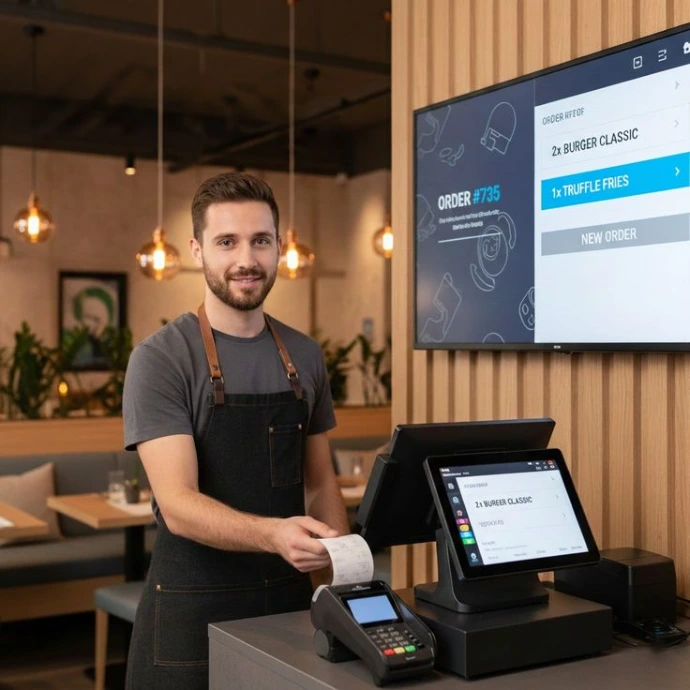
The real problem for hospitality and retail is fragmentation
Most restaurants and retail shops in Switzerland already have a till. They often also have an accounting package, a stock management system (or a spreadsheet) and an online shop. The problem is that these systems don't communicate with each other.
Every evening the till closes. Data lands in a register. Accounting is updated manually the next day. The warehouse is checked visually once a week. E-commerce has its separate inventory, with the constant risk of selling online products that have run out in-store.
In Switzerland, where staff costs are among the highest in Europe, every hour spent on manual reconciliations is a direct cost to the operating margin.
The hidden cost of fragmented management
- For a restaurant with 50 covers: 2–3 hours of manual work daily between orders, till reconciliations and data entry into accounting
- 5–8% stock waste from incorrect supplier orders (stock levels not updated)
- 10–15% errors in kitchen orders with traditional ordering systems
- For a multi-channel retail shop: hours lost weekly manually synchronising physical inventory and e-commerce
- Lost sales from online stock-outs on products available in-store (or vice versa)
Swiss market specifics for hospitality and retail
- Tax compliance: end-of-day closings compliant with the Swiss Federal Tax Administration (FTA), separate VAT for takeaway and table service
- Multi-language: in bilingual cantons or Ticino tourist venues, the system must manage interfaces in Italian, German and French
- Seasonality: mountain restaurants, seasonal venues, events — the system must manage seasonal openings and closings without administrative complexity
- Variable connectivity: at many Swiss locations (mountain huts, trade fairs, events) internet connection is not stable — the system must work offline